


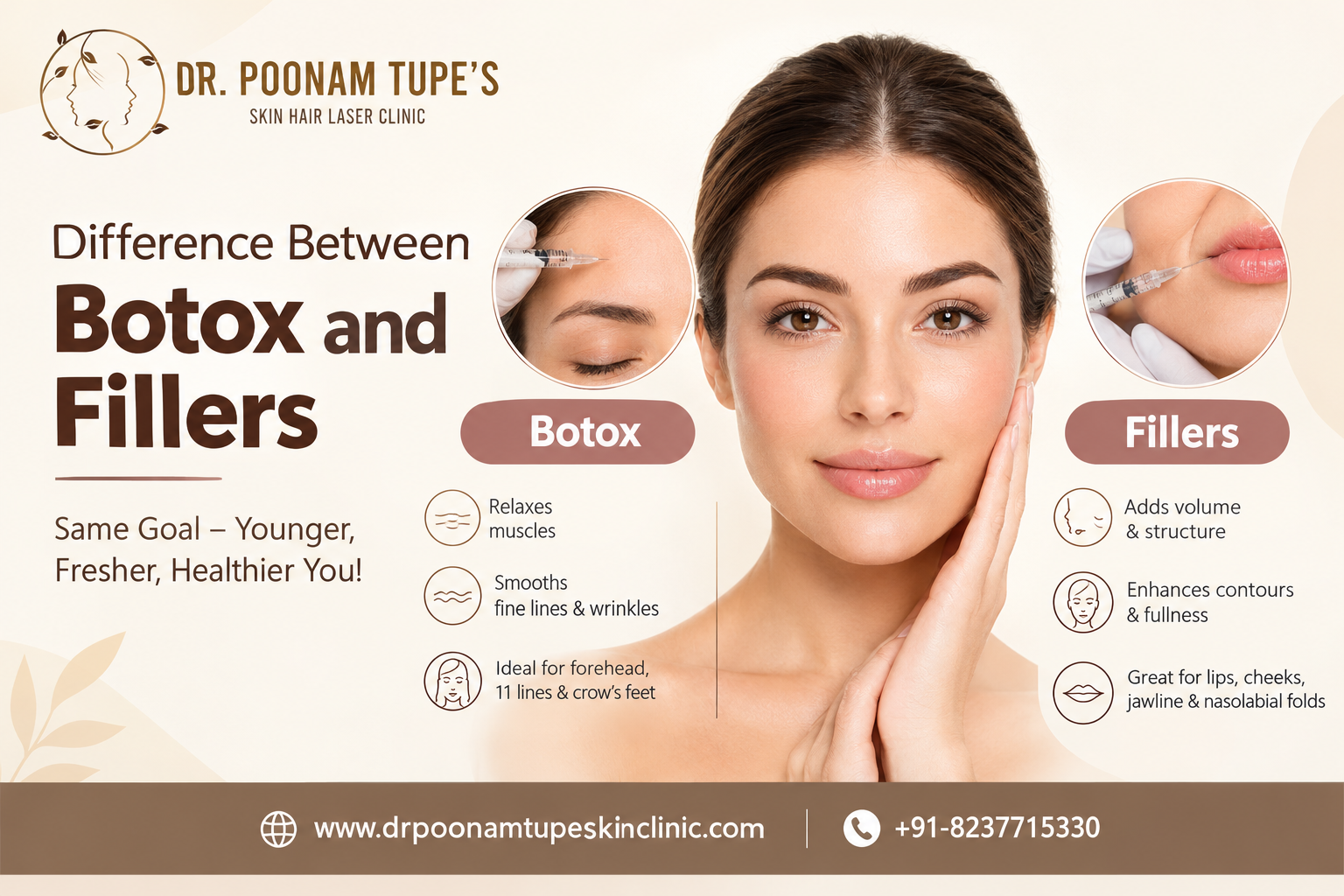
Difference Between Botox and Fillers: Which One Does Your Face Actually Need?
Table of Contents
You’re staring at a fine line on your forehead, or a hollow under your eyes. A friend says, Just get Botox.” Another says fillers, obviously.
Who’s right? Possibly both, possibly neither.
The difference between Botox and fillers comes down to what each one fixes. This guide explains it simply, so you walk into a clinic in Hadapsar or anywhere in Pune informed.
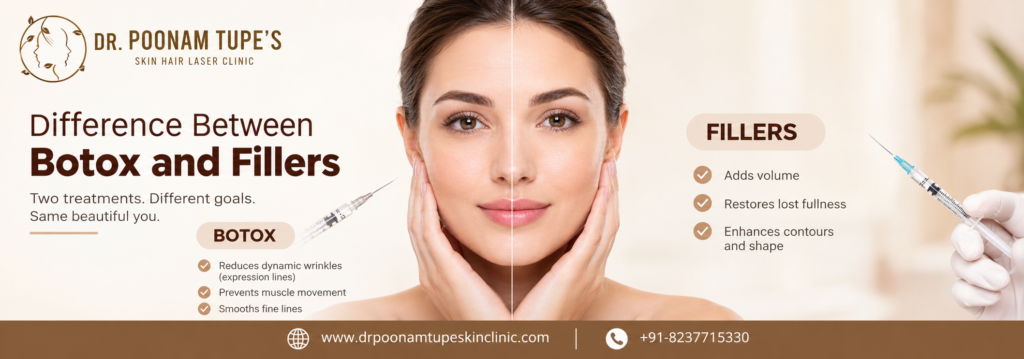
Botox vs Fillers at a Glance
Botox relaxes muscles to smooth wrinkles caused by movement. Fillers add volume to restore lost fullness and contour.
|
Botox |
Dermal Fillers |
|
|
What it is |
Botulinum toxin type A |
Gel, usually hyaluronic acid |
|
What it does |
Relaxes targeted muscles |
Adds volume and structure |
|
Best for |
Frown lines, forehead lines, crow’s feet |
Cheeks, lips, under-eye hollows, nasolabial folds |
|
Results appear |
3–7 days (full effect ~2 weeks) |
Immediately |
|
Lasts |
About 3–4 months |
About 6–18 months, depending on product and area |
What Is Botox?
Botox is a purified protein called botulinum toxin type A. In tiny, controlled doses, it temporarily blocks the signal between a nerve and a muscle.
The muscle relaxes. The skin above it stops creasing.
That’s why Botox works so well on dynamic wrinkles, the lines that appear when you frown, squint, or raise your eyebrows. If you’re considering botox treatment for face concerns, this is the category it targets.
Is Botox Surgery?
No. People often search for botox surgery, but there’s no surgery involved. It’s a quick, non-surgical injection done in a clinic. There are no cuts, no stitches, and no general anesthesia.
Where Is Botox Used on the Face?
Botox treatment in Pune clinics usually targets:
- Forehead lines
- Frown lines (the “11s” between your brows)
- Crow’s feet around the eyes
- Bunny lines on the nose
- Lip lines and a slightly downturned mouth
- Jawline and masseter muscles, for clenching or a softer jaw shape
What Are Dermal Fillers?
Fillers are soft gels injected under the skin. Most are made of hyaluronic acid (HA), a substance your body already produces. It holds water and keeps skin plump.
As we age, we lose collagen, fat, and bone support. The face loses volume, and skin starts to sag or fold.
Dermal filler injections replace that lost volume. They don’t freeze movement. They lift, plump, and reshape.
What Can Fillers Treat?
- Flat or hollow cheeks
- Nasolabial folds (smile lines)
- Marionette lines around the mouth
- Thin lips, with lip fillers used for shape and fullness
- Under-eye hollows, where an under-eye filler softens shadows
- Weak chin or jawline definition
- Hand volume loss
The Core Difference Between Botox and Fillers
Here’s the simplest way to think about Botox vs. fillers.
- Botox treats movement. This softens lines caused by repeated muscle action.
- Fillers treat volume loss. They fill, lift, and sculpt areas that have thinned or sunk.
Picture a crumpled paper bag versus a deflated balloon. Smoothing the bag’s creases is Botox. Pumping the balloon back up is filler.
1. How They Work
Botox acts on the muscle. Fillers act on the space beneath the skin.
2. How They Treat
Botox smooths lines that show up when you move your face. Fillers suit folds and hollows that are visible even when your face is relaxed.
3. How Fast You’ll See Results
Fillers show results right away, though mild swelling can hide the final look for a few days. Botox takes longer. Expect early changes in 3–7 days and the full effect around two weeks.
4. How Long They Last
Botox typically lasts around 3–4 months. Filler longevity varies. Lip fillers may fade in 6–9 months, while cheek or chin fillers can last a year or more.
5. Cost Structure
Botox is usually priced per unit or per area. Fillers are priced per syringe. Prices vary by city, product brand, and the doctor’s expertise, so ask for a clear quote during your consultation.
Which One Is Right for You?
Don’t self-diagnose from Instagram. A good consultation looks at your face in motion and at rest.
Still, these pointers help.
Choose Botox If:
- Lines appear when you frown, squint, or raise your brows
- If you want a preventive approach in your late 20s or 30s
- You have a “tired” or “angry” expression from muscle tension
- If you want to relax a tight jaw
Choose Fillers If:
- Your face looks flatter or more hollow than before
- You have deep folds that stay visible at rest
- If you want fuller lips or better cheek and chin definition
- You have under-eye hollows that cast shadows
Or Choose Both
Many people do. A forehead with lines and hollow temples might need Botox on top and filler beneath. Combined, the result often looks fresher and more natural than either treatment alone.
Some people pair them with other anti-aging and skin rejuvenation treatments, such as chemical peels or microneedling, for an overall anti-aging treatment plan in Hadapsar.
What If the Real Problem Is Dull or Uneven Skin?
Botox and fillers don’t fix pigmentation, dark spots, or dullness. If that’s your main worry, skin brightening treatments may be a better starting point.
What to Expect During the Treatment
Both procedures are quick, usually 15–30 minutes.
Botox Procedure
- Your doctor cleans the skin and marks injection points.
- Very fine needles deliver small amounts into specific muscles.
- You can return to normal activities right away.
Filler Procedure
- Numbing cream is often applied first. Many fillers also contain a built-in anesthetic.
- The gel is placed with a needle or cannula.
- The doctor shapes it gently for a smooth finish.
Most people describe both as mildly uncomfortable rather than painful.
Side Effects and Risks
Both are generally safe when done by a qualified, experienced doctor using approved products. Still, you should know what can happen.
Common, Short-Term Effects
- Redness or tiny bumps at the injection sites
- Bruising
- Mild swelling
- Slight tenderness
Rarer Risks
- Botox: headache, or a drooping eyelid or brow if the product spreads to the wrong muscle
- Fillers: lumps, asymmetry, or, very rarely, blocked blood flow (vascular occlusion), which is why injector skill matters so much
The good news about HA fillers: if you don’t like the results, an enzyme called hyaluronidase can dissolve them. Botox can’t be reversed, but it fades on its own.
Aftercare Tips
After Botox:
- Avoid rubbing the treated area for several hours
- Stay upright for about 4 hours
- Skip intense workouts for the rest of the day
After fillers:
- Avoid heavy exercise and alcohol for 24 hours
- Skip facials and extreme heat (saunas, steam) for a couple of days
- Don’t massage the area unless your doctor tells you to
Who Should Avoid These Treatments?
Skip or postpone treatment if you are:
- Pregnant or breastfeeding
- Dealing with an active skin infection where injections are planned
- Living with certain neuromuscular conditions
- Allergic to ingredients in the product
Always share your full medical history and current medications.
How to Choose the Right Clinic
-
This matters more than the product itself, whether you’re looking for dermal fillers in Pune or anywhere else.
- Check credentials. Look for a qualified dermatologist or trained aesthetic physician, such as Dr. Poonam Tupe.
- Ask what product they use. It should be an approved, genuine brand with sealed packaging.
- Look at real before-and-after photos.
- Be wary of “too cheap” offers. Discounted deals often mean diluted or unverified products.
- Choose a convenient location. Regular follow-ups are easier when the clinic is close. See our clinic locations in Hadapsar and Keshav Nagar.
- Trust your gut. A good doctor will sometimes tell you not to do something.
Botox will make my face frozen. Not when dosed properly. Good results look like a rested version of you.
Fillers change your face shape. Used well, they restore balance. Overfilling is what creates an unnatural look.
Once you start, you can’t stop. You can stop anytime. Your face simply returns to its natural baseline over time.
Conclusion
The difference between Botox and fillers is simple once you see it. Botox quiets the muscles that cause expression lines. Fillers rebuild the volume that time takes away. Some faces need one, some need both, and a good doctor will tell you honestly which.
Before you book, get a proper consultation and ask questions. Your goal isn’t a different face. It’s the best version of the one you have.
Ready to talk it through? Book a consultation at Dr. Poonam Tupe’s Skin Clinic in Hadapsar and get Botox and filler advice tailored to your face.
FAQs
What is the main difference between Botox and fillers?
Botox relaxes muscles to reduce movement-related wrinkles. Fillers add volume to smooth folds, lift areas, and restore contour.
Which lasts longer, Botox or fillers?
Fillers usually last longer, around 6–18 months, while Botox lasts about 3–4 months.
Can I get Botox and fillers on the same day?
Yes, many doctors combine them in one session. Your doctor will decide what’s best for your face.
Which one should I try first?
It depends on your concern. Lines from movement point to Botox. Volume loss or hollowness points to fillers.
Does Botox or filler hurt?
Most people feel a brief pinch. Numbing cream makes it more comfortable.
At what age should I start Botox or fillers?
There’s no single right age. It depends on your skin, your concerns, and your goals. Some people in their late 20s or 30s start Botox to soften early lines. Fillers are usually considered when volume loss becomes noticeable, often later. A doctor can assess your face and tell you if you need treatment at all.
Can fillers be reversed if I don't like the result?
Hyaluronic acid fillers can be dissolved with an enzyme called hyaluronidase, usually within a short visit. Botox can’t be reversed, but its effect wears off naturally in a few months.
Can I wear makeup or exercise right after treatment?
Most doctors suggest waiting about 24 hours before makeup and heavy exercise, so the product settles and bruising or swelling doesn’t worsen. Follow the exact instructions your doctor gives you, since they can differ by area and product.
Are Botox and fillers safe?
Both are widely used and considered safe when given by a qualified doctor with approved, genuine products. Most side effects, like redness, bruising, or mild swelling, are temporary. Serious complications are rare, but they’re the reason you should never choose a clinic on price alone.